HOB vs COB LED walls: why Walnut can take a knock
Protecting the big one
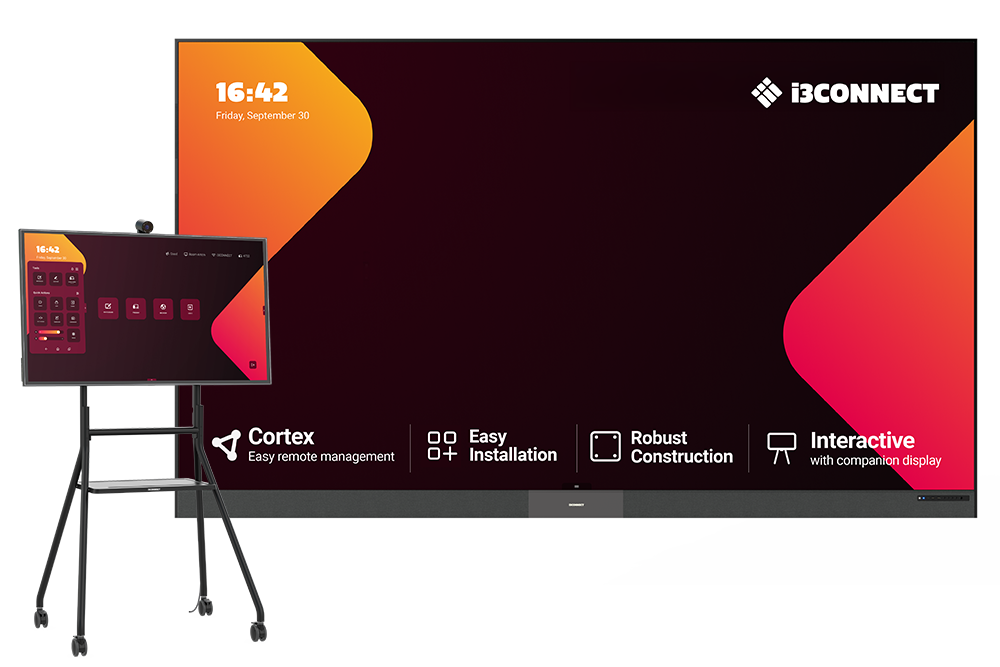
It's Monday morning, two hundred students file in, chairs scrape across the floor, and someone's backpack swings a little too wide and hits the 165" LED wall. A large display built up of thousands of tiny LED lights. How are those lights protected?
That's where two terms from the spec sheet come in: COB (Chip on Board) and HOB (Hot-melt on Board). Walnut, our LED wall, uses HOB. Below you'll find what both terms mean in everyday language, and what HOB changes for the rooms you present in.

How an LED wall is built
Every LED wall is built up from many square panels covered in tiny red, green and blue lights. Up close you see a fine grid of dots. From a few metres away they blend into one sharp image. Because those lights are small, fragile and right at the front of the screen, they need a protective layer. COB and HOB are two ways of adding one.
-
COB: chip on board
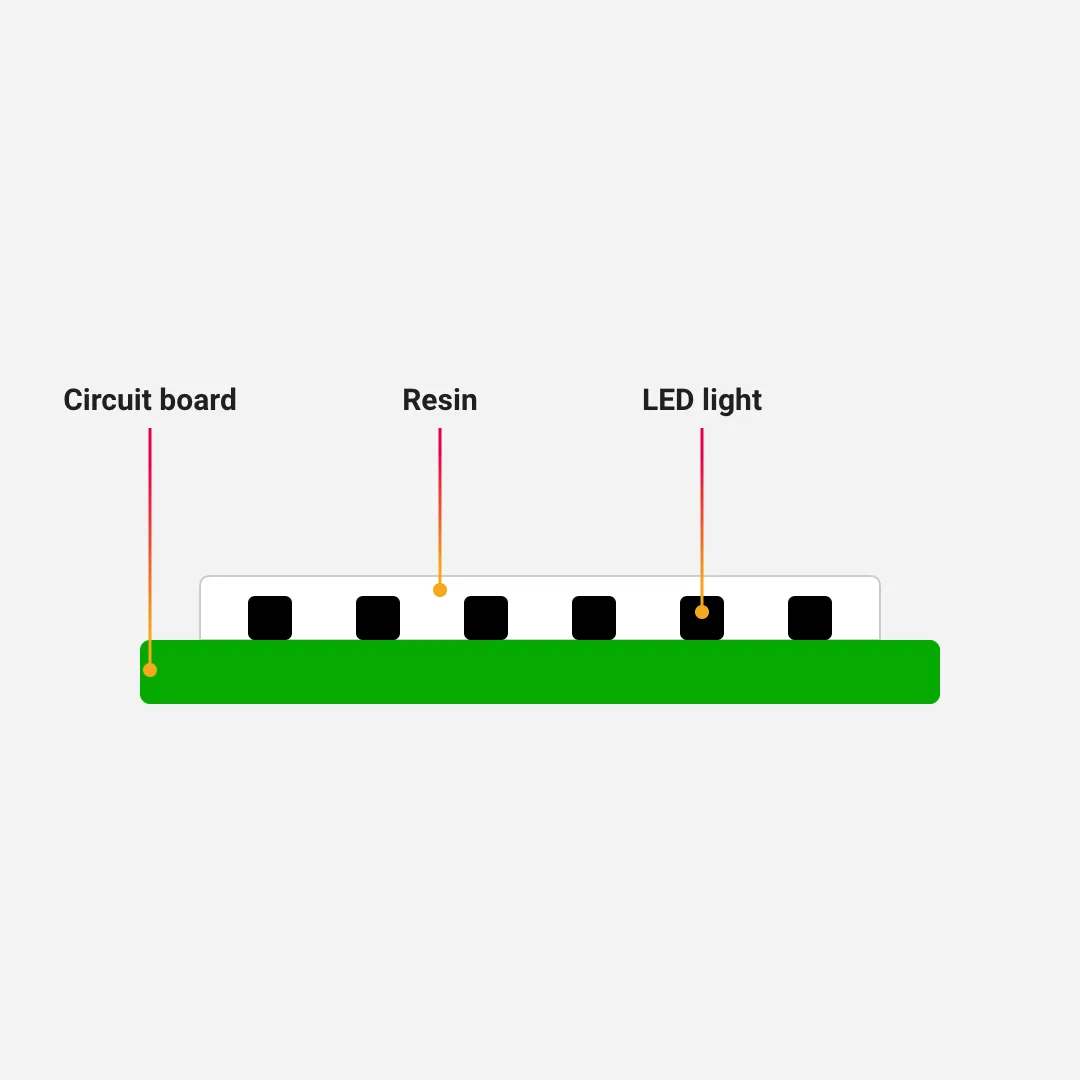
With COB, the bare light chips are fixed straight onto the circuit board and the whole surface is sealed under one continuous layer of resin. It's a strong, well-sealed design, and it's a popular choice for very fine screens that people view from close by.
The trade-off is cost and a shiny surface that reflects light easily. Fixing bare chips to the board and sealing them in one go is a more complex process, so COB modules are more expensive to make.
-
HOB: hot melt on board
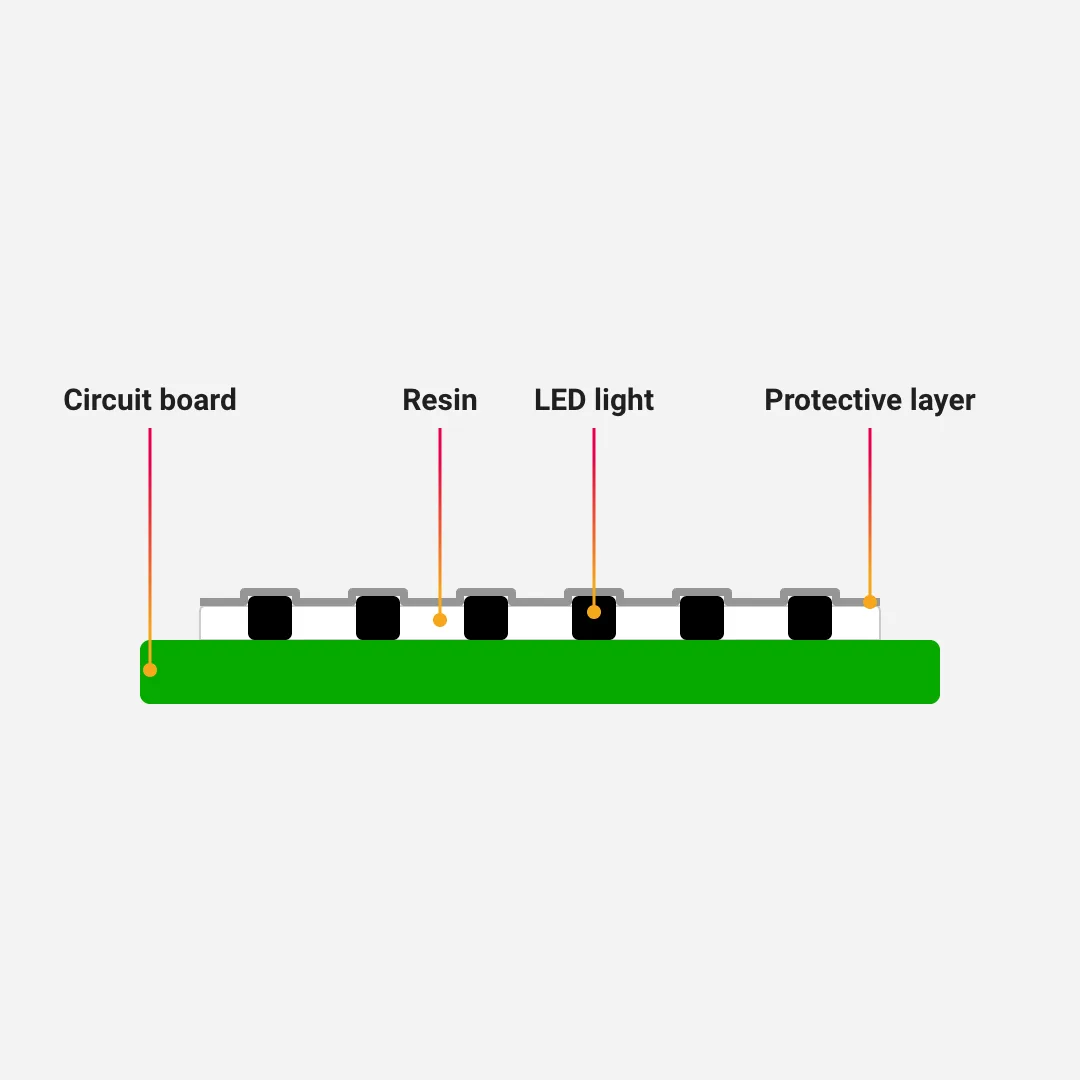
HOB starts with standard LEDs, the same proven LED lights that these walls have used for years, soldered onto the circuitboard. A resin is then melted over the top and sets into a hard, flat, matte surface just below the tops of the LED lights.
Another layer seals the LEDs in with a protective layer, so a bump or a layer of dust meets the coating first and the lights underneath stay untouched. It also results in a matte surface that naturally avoids light reflection on the display.


See it in action
Want to see how it looks in your hall?
Where HOB makes a difference in your rooms
The many moments that HOB makes the whole experience easier.

Installation day
Our all-in-one LED wall arrives in a few sections and with a frame. Installers build up the frame, hang up the few sections, and then line up square panels with the display. Thanks to an array of magnets, each LED panel falls magnetically into place and connects to the board instantly.
Normally, doing this installation is the moment when an exposed LED near the edge of a panel is most likely to get knocked loose. On Walnut the HOB coating covers the LEDs across the whole panel to prevent damage during installation. Your wall is complete on day one, with no dark spots to chase up.

A busy hall, every day
In a school hall or a lecture theatre, the wall is close to where people move. A stack of chairs gets pushed against it after an event, a student leans on the edge of the stage, a cleaner brushes past with a trolley. With the LEDs sealed under a hard layer, those everyday knocks land on the coating. The picture looks the way it did in week one, and your caretaker can get on with the rest of the clean-up.

Bright rooms. Long lectures.
Halls and lecture theatres often have big windows or strong ceiling lights. HOB's matte surface takes the shine off reflections, so black areas of a slide stay black. Walnut W1 also has an ambient light sensor that adjusts the brightness to the room, up to 600 cd/m². It's certified low blue light by TÜV Rheinland too, which makes a long lecture easier on everyone's eyes.
Why we chose HOB for Walnut
Walnut W1 is made for big, shared rooms: school halls, lecture theatres, auditoriums and large meeting spaces. HOB gives you a well-protected surface for a room that gets used every day. Walnut W1 is rated for 100,000 hours or more, and we are so confident that we give 3 years of warranty from shipment, higher than most in the LED wall market.
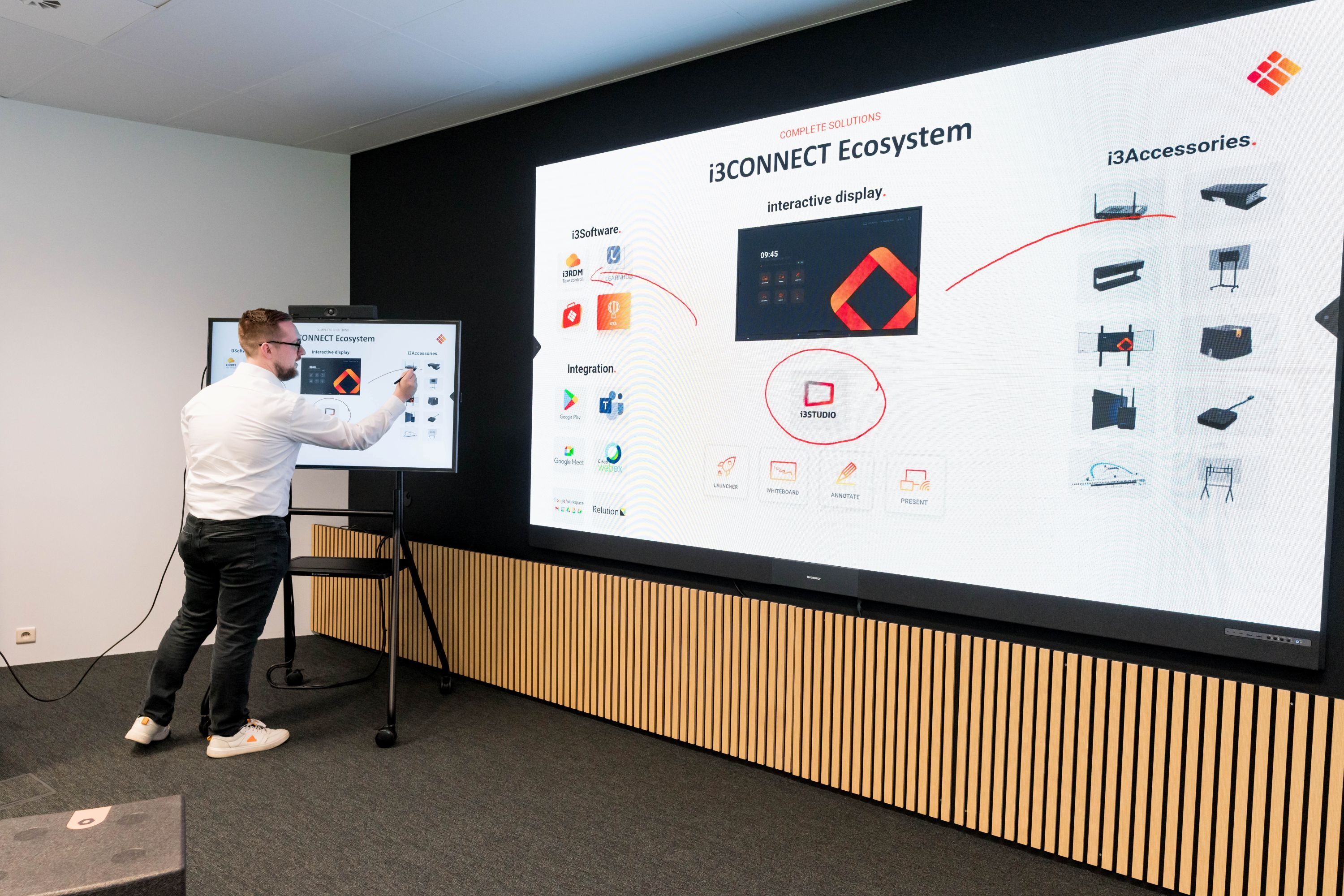
The protection is only half of it. Walnut starts up in i3CONNECT Studio, the same interface we use on all of our displays and that teachers already know from their i3CONNECT classroom displays. Anyone can share to Walnut in the same way they did on other displays. Wirelessly with AllSync, up to six devices at once, or cabled with HDMI. Pair it with an i3SIXTY 3 digital flipchart on the podium so that you can swipe through slides, annotate over your screen or even show a website, while the whole hall follows along on the wall.
See it in action
Want to see how it looks in your hall?